

Pancakes Maison : La Recette pour un Moelleux Incomparable
Explorez nos meilleures recettes de pancakes
Véritable star du brunch, le pancake américain se distingue par son épaisseur et sa texture “fluffy” (nuageuse). Contrairement à la crêpe, le pancake joue sur le gonflant pour absorber sirops et toppings. Que vous soyez adepte du classique au sirop d’érable ou en quête de variantes plus saines à la banane ou à l’avoine, nous vous guidons étape par étape pour maîtriser la cuisson à la poêle et obtenir des disques dorés et ultra-moelleux.
-
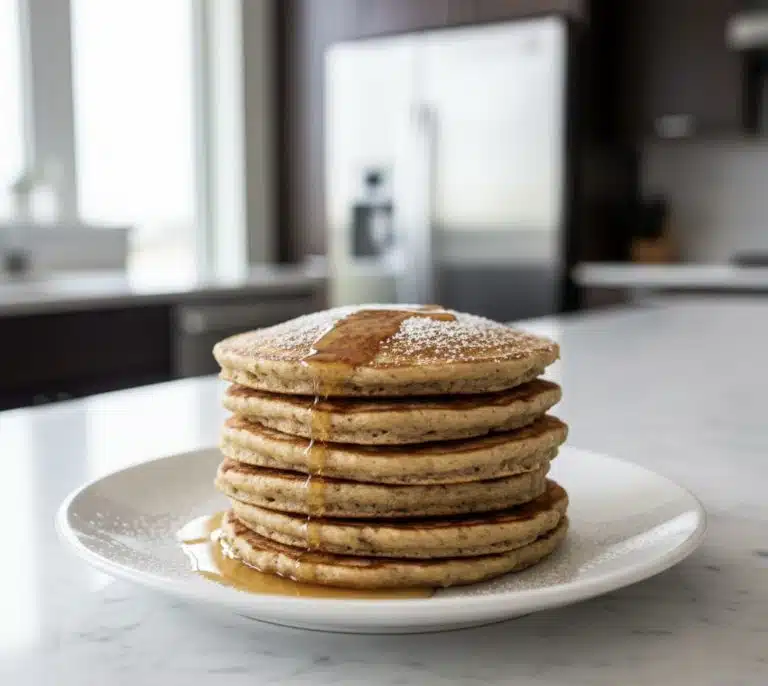
Pancakes Healthy (flocons d’avoine)
Le secret nutrition : Contrairement aux pancakes classiques, les flocons d’avoine apportent des fibres bêta-glucanes qui ralentissent la digestion. Cela signifie : pas de pic d’insuline et de l’énergie pour toute la matinée !
Secrets et astuces pour des pancakes parfaits 🥞
Le secret réside dans deux points : ne pas trop mélanger la pâte (laisser quelques grumeaux est bénéfique) et utiliser un agent levant comme la levure chimique combinée à un filet de jus de citron ou du lait fermenté. Cela crée une réaction chimique qui fait gonfler la pâte instantanément à la cuisson.
L’indicateur visuel est crucial : attendez que de petites bulles se forment et éclatent à la surface du pancake. Si les bords commencent à paraître mats et figés, c’est le moment idéal pour glisser la spatule et retourner le pancake d’un geste sec.
C’est souvent dû à un sur-mélange de la pâte qui développe trop le gluten, ou à une levure périmée. Pour des pancakes bien épais, la pâte doit être plus dense qu’une pâte à crêpes. Elle ne doit pas couler trop vite dans la poêle, mais former un petit dôme.
Contrairement à la pâte à crêpes, la pâte à pancakes n’aime pas trop attendre car la levure s’active dès le mélange. Si vous devez la préparer d’avance, gardez-la au frais et ne la remuez pas brutalement avant cuisson pour ne pas chasser les bulles d’air emprisonnées.
Pour servir tout le monde en même temps, placez vos pancakes cuits sur une plaque au four à 80°C. Ne les couvrez pas hermétiquement avec de l’aluminium, car la condensation les ramollirait. Laissez-les respirer pour qu’ils conservent leur texture aérienne.


