

Macarons Maison : La Recette Inratable et nos Meilleures Saveurs
Le macaron est le défi ultime de tout passionné de pâtisserie. Entre la meringue française ou italienne, le macaronnage et le temps de croûtage, chaque détail compte. Que vous rêviez de coques lisses à la vanille, au chocolat ou aux saveurs plus audacieuses, nous vous accompagnons pas à pas pour obtenir un résultat digne des plus grands chefs, avec cette fameuse collerette tant recherchée.
-
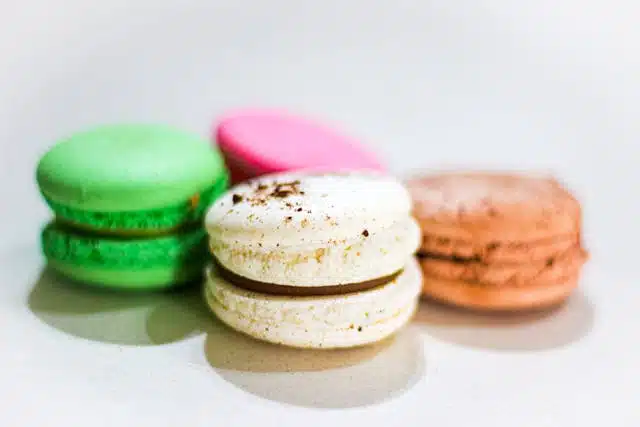
Macaron Vanille
Le macaron vanille est une pâtisserie délicate, à la coque légère et au cœur fondant. Subtil et raffiné, il met en valeur la douceur naturelle de la vanille.
-
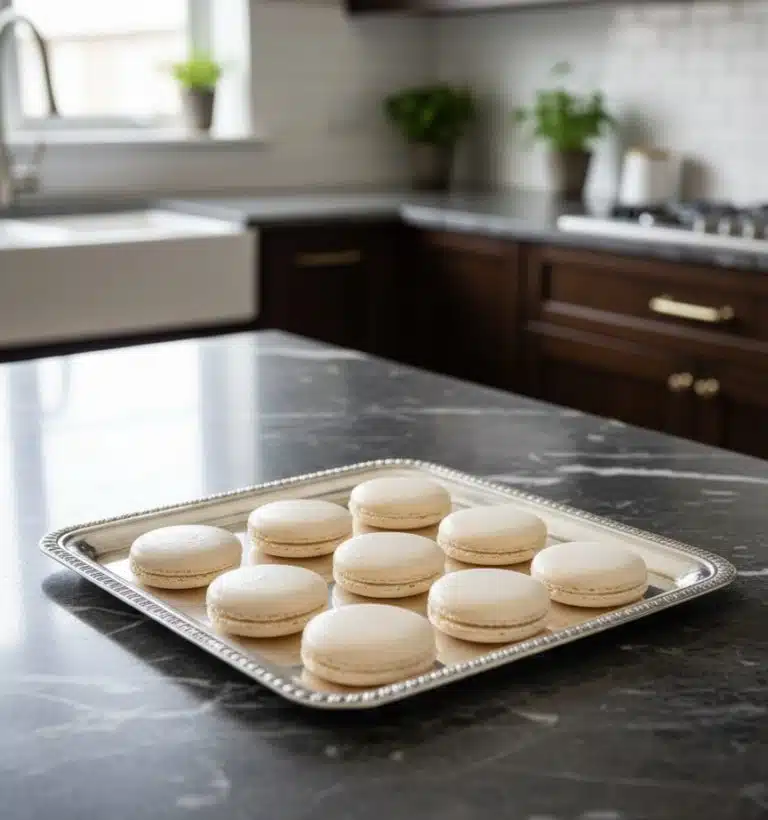
Macarons coques faciles
Ma méthode simplifiée pour des coques lisses, brillantes et sans craquelures. Le point de départ de toutes vos créations.
-
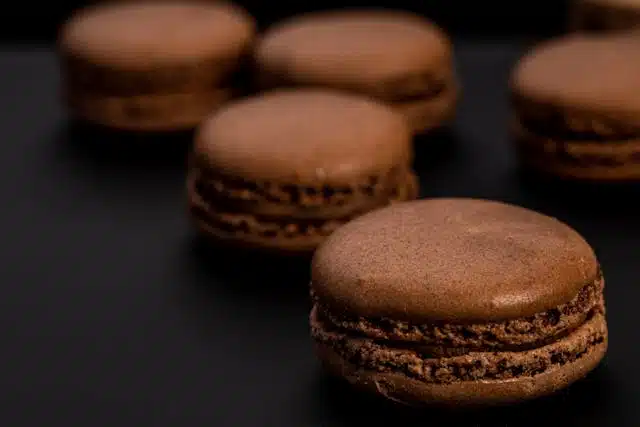
Macarons ganache chocolat
L’alliance ultime entre le croquant de la coque et le fondant d’un chocolat de couverture de qualité. Un grand classique.
Les clés techniques pour réussir tous vos macarons 🍬
Le tant-pour-tant est le mélange à parts égales de poudre d’amande et de sucre glace. Pour obtenir des coques lisses, il est impératif que ce mélange soit mixé finement puis tamisé. Cela élimine les morceaux d’amande trop gros qui pourraient faire craquer la coque ou lui donner un aspect granuleux inesthétique.
C’est une astuce de chef ! Séparer les blancs des jaunes 24h à 48h à l’avance et les laisser au frais (en les ramenant à température ambiante avant usage) permet de détendre l’albumine. Les blancs montent mieux, sont plus stables et le risque de voir vos coques retomber ou s’étaler est nettement réduit.
Le macaronnage est l’étape la plus délicate. Pour vérifier la texture, soulevez la pâte avec une spatule : elle doit s’écouler lentement et de manière fluide en formant un ruban continu. Si la pâte s’arrache, elle n’est pas assez travaillée ; si elle s’étale instantanément comme une flaque, elle l’est trop. L’aspect doit être brillant et lisse.
Le croûtage consiste à laisser les macarons sécher à l’air libre avant cuisson. Cela crée une fine pellicule sèche sur le dessus. Lors du passage au four, l’air chaud cherche à s’échapper par le bas, ce qui soulève délicatement la coque et crée la fameuse collerette. Sans croûtage, l’air s’échappe par le haut et fait craquer le macaron.
Le macaron est très sensible à la répartition de la chaleur. L’idéal est d’utiliser des plaques en aluminium perforées qui permettent une circulation d’air homogène. Si vous n’en avez pas, une astuce consiste à superposer deux plaques de cuisson classiques pour isoler légèrement le bas des macarons et favoriser une montée régulière de la collerette.


